





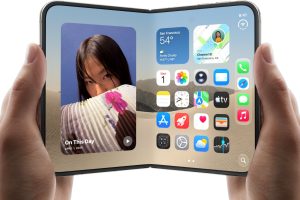


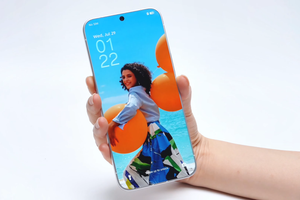


The foldable smartphone market took a major step forward with Apple much-awaited iPhone Duo launching into an industry others had been exploring for years Samsung’s foldable technology. The iPhone Duo comes alongside Samsung’s elegantly designed Galaxy Z Fold 8, introducing Apple’s first foldable device and setting the stage for a competition between the two operating systems and their optimization for foldable devices. While both flagships claim to offer a productivity experience akin to a desktop on a portable form factor, the two devices take a different approach to the concept of a foldable device from a hardware and software standpoint. The design, performance, camera capabilities and software features of the iPhone Duo versus Galaxy Z Fold 8 provide a comparison to determine who has the next generation of foldables advantage.
Display technology and visual ergonomics
The most important thing about the foldable is the display quality, as users switch regularly between small cover screens in the folded position to large in-canvas screens.
The outer cover screen of the iPhone Duo is a 5.4-inch Super Retina XDR display while the inner screen is 7.6-inch, giving the smartphone a 50% larger screen area than the iPhone 18 Pro Max, which is perfect for single-handed operation and for doing quick tasks. Both shows feature Apple’s ProMotion technology, which adapts to a 120Hz refresh rate. A multi-layer polymer construction is used for the inner panel, which is designed to reduce the visibility of the crease and provides accurate colors with good dynamic range.
Galaxy Z Fold 8 has a matching 7.6-inch Dynamic LTPO AMOLED 2X display that boasts a 4:3 aspect ratio and 2448 x 1848-pixel resolution. In terms of brightness, Samsung is leading the pack with up to 3,000 nits for the main display, which is good for outdoor viewing. A new anti-reflective coating has been placed on the display to eliminate a lot of ambient glare. The Z Fold 8 has a 5.5-inch cover screen with a 120Hz refresh rate on the exterior, ensuring a well-rounded experience for messaging, web browsing, and media playback without unfolding the display.

The use of processing power, efficiency and thermal management
Inside the devices are the best 3nm silicon architectures designed for intensive multi-tasking and powerful on-device artificial intelligence workloads.
The iPhone Duo is powered by Apple A20 Pro processor, which is accompanied by a dedicated secondary display engine to handle both displays at the same time without dropping frames. Apple engineer-designed vapor chamber cooling system in the all-thin casing ensures consistent performance when using multiple applications or running heavy games. The A20 Pro has been equipped with new Neural Engine clusters that are optimized for on-device Siri AI processing, background image processing and real-time layout rendering. Apple uses its N1 chip to handle Wi-Fi 7 and Bluetooth 6.0 connectivity and also its own C2 cellular modem system to boost power efficiency.
Galaxy Z Fold 8 is powered by Qualcomm Snapdragon 8 Elite Gen 5 CPU for Galaxy platform, which is enhanced by custom Oryon CPU cores and Adreno 840 GPU. With up to 16GB of LPDDR5X RAM and up to 1TB of UFS 4.0 storage, the Z Fold 8 offers desktop-grade computing power. The Snapdragon 8 Elite Gen 5 is more powerful in sustained graphics performance and raw multi-threaded computing than any other chipset in synthetic benchmarks or real-world gaming, where it performs well when running multiple demanding Android applications at the same time.
Multitasking Software and OS
The usefulness of a mobile phone that folds in half depends on the software it offers to make use of the extra screen area. In this context, the two tech giants differ in how they implement their user interface.
Considering iOS is a mobile operating system, Apple specifically designed it for the iPhone Duo form factor, with an emphasis on fluid multi-window gestures, with users able to run two full-sized apps side-by-side. Interactive drag-and-drop interaction between active windows, including transferring media directly from photos to workspace documents. The iPhone Duo can be partially folded or propped open, and it will automatically turn into a smart, stand-by device such as a display or bedside clock. On-device Siri AI integration allows for context-aware support, such as calendaring, creative copy optimization, and app workflow management, among other features.
Samsung One UI 9 is based on Android 17, which it just so happens offers eight generations of foldable software improvements for the Galaxy Z Fold 8. Samsung’s multitasking experience is the most flexible in the mobile industry, with up to 3 separate app windows per time, with floating views appearing on the screen, and a taskbar that stays on the bottom. When paired with external monitors, the Z Fold 8 can seamlessly convert into a complete desktop computer with Samsung DeX support. One UI 9 also provides an unparalleled productivity suite for power users, thanks to Galaxy AI features that convert live text into other languages, automatically summarize notes and edit photos creatively.
camera systems, imaging AI, battery endurances are the three main areas
Historically, there have been compromises with photography on foldable devices, but the new iPhone Duo and Galaxy Z Fold 8 boast high-end camera tech.
The iPhone Duo features a Dual Fusion camera array with 48MP resolution, powered by powerful computational photography algorithms on the A20 Pro chipset. Senders can record up to 4K video at 120 fps and can play the clips at the full playback speed of the film. Then the outer screen becomes a live preview display (Duo Preview) so that subjects can see themselves when taking selfies with the higher-resolution rear primary cameras. The Smart Take function features on-device AI models that can capture group photos when subjects pose without the need for a shutter person.

Galaxy Z Fold 8 sports a dual 50MP primary camera and ultrawide camera with dual-pixel autofocus and optical image stabilization, with 8K video recording. With Samsung ProVisual Engine AI in support of night photography and generative object removal, color tuning on the Z Fold 8 highlights vibrant and saturated colors with high dynamic range.
As far as battery life is concerned, both feature advanced dual-battery setups which fit into split chassis compartments. The iPhone Duo dual-battery design is complemented by global eSIM-only construction, which allows the most space to house the cells, resulting in up to 31 hours of continuous video playback on the main screen. The fast charging supports 25W MagSafe and Qi2 wireless charging and can charge to 50% in 20 minutes with wired charging. Galaxy Z Fold 8 features a 4,800mAh silicon-carbon battery designed to be able to give you a full day of battery life, with 45W wired fast charging and 20W wireless charging as well.
The decision between the iPhone Duo and Galaxy Z Fold 8 boils down to software tastes and design considerations. The iPhone Duo is an iPhone-centric device with a “dual-app multitasking” feature that will be particularly appealing to senders who value seamless integration with iOS, high-quality materials, and streamlined dual-app multitasking. However, users who want the most out of their device and maximum multitasking flexibility will be pleased with the Galaxy Z Fold 8 multi-window desktop and its tried-and-tested foldable software layout.