







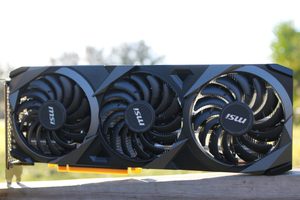



The prices of graphics processing units (GPUs) in Germany and all over the European Union (EU) have reached a phase of structural stability, albeit with a few minor fluctuations. After many years of dynamic supply chain changes, tariff volatility and crypto-boom markups, 2026 GPU supply in Germany is on a more even keel with regular distribution channels and inventory. But the specifics of the German market for PC builders and hardware fans are hard to deal with, especially because the 19% Value Added Tax (Mehrwertsteuer / MwSt.) is added to all retail list prices and European distribution costs are also higher in the region.
When comparing the Manufacturer’s Suggested Retail Prices (MSRP) between manufacturer’s in the U.S. and Germany, any U.S. baseline pricing figures must be translated into Euros, and any import taxes or regional distributor margins must be considered. As NVIDIA GeForce RTX 50 series (Blackwell architecture) and AMD Radeon RX 8000 series (RDNA 4 architecture) are firmly in the retail market, it is important to know what the prices are in the major German retailers on both sides so as to maximize value for performance.
Overview of GPU Pricing Tiers in Germany (19% MwSt. Included)
You will find different performance levels in the German graphics card market, from entry-level 1080p gaming products to the most die-hard 4K workstation. In German online retail stores, the 19% MwSt applied to all advertised retail prices means that the numbers are higher than those reported pre-tax in the United States as the MSRP.
- Ultra-Enthusiast Tier (€1,199 – €2,199+): These are typically flagship cards, such as the NVIDIA GeForce RTX 5090, and high-end AIB modifications. Optimized for uncompromised 4K gaming, heavy ray tracing and localized generative AI workloads.
- High-End Performance Tier – These will be the cards that feature the RTX 5080, RTX 5070 Ti and the highest-end AMD Radeon RX 8000 series flagships. Designed for the higher refresh rate 1440p displays and entry 4K game tech.
- Mainstream Sweet-Spot Tier (€380 – €649): Popular mid-range options such as the RTX 5070, RTX 5060 Ti and AMD Radeon RX 8700 XT are part of this tier. As the largest market in Germany for standard 1440p gaming setups, it’s hard to miss.It’s impossible to overlook, as it’s the largest market in Germany for standard 1440p gaming configurations.
- Budget & Entry-Level Tier (€190 – €350): Entry level cards such as Intel Arc solutions, Radeon RX 8600 series and RTX 5060. Designed for 1080p competitive use and budget-friendly builds.
Market Dynamics In Europe : NVIDIA Blackwell vs AMD RDNA 4
The German market continues to be highly competitive and NVIDIA maintains a high level of pricing leverage, especially in the higher and enthusiast end. The need for hardware-accelerated ray tracing, DLSS 3.5/4 frame generation, and CUDA-based AI capabilities enables custom add-in board (AIB) manufacturers like ASUS, MSI, Gigabyte, and Gainward to keep the RTX 50-series GPUs premium in European retail channels. In many cases, flagship PCs such as the RTX 5090 are sold around or just above their Euro MSRP, thanks to its consistent sales from creative professionals, local tech startups, and high-budget gamers.

In contrast, AMD approach to the German market is oriented towards price-to-performance in mid-range and high-performance. AMD Radeon RX 8000 series has proven very successful on German price comparison platforms with its increased VRAM capacities at more affordable price points than its NVIDIA counterparts. Rasterization-intensive gaming applications often come with a competitive price adjustment on the major German retail sites on custom AMD boards from partners such as Sapphire, PowerColor and XFX, which are more focused on the European market.
Things To Consider When It Comes To Shopping GPUs In Germany
Buyers who buy graphics hardware in Germany need to take into account certain economic and logistical considerations before they get to the checkout counter:
- Cross-Border EU Shipping: Purchasers can order GPUs from retailers in neighboring countries in the EU (the Netherlands, France, Austria, and others) without paying import duties on the products, but the retailers may adjust the VAT in the final invoice.
- MwSt. For Non-EU Residents: Tax refunds are possible for Non-EU Residents, who travel or are temporarily residing in the Non-EU zone, on the 19% MwSt. amount on the newly imported hardware when exported from the Non-EU zone through customs validation points.
- In the case of B2B Business Tax Deductions, registered business entities in Germany (GmbH, UG or Freiberufler) can claim the input tax (Vorsteuerabzug) for the 19% MwSt. paid on the purchase of GPUs for professional purposes (development, computational rendering and AI workload).
- Refurbished and B-Stock Deals: The big German stores regularly offer B-Ware at a 10%-20% discount and they rely on two-year statutory warranty laws in Europe (Gewährleistung).
For the rest of 2026, GPU markets in Germany are projected to be unchanged, unless there are significant macro-economic changes or currency fluctuations between the Euro (EUR) and US Dollar (USD).
Timing computer component sales around Black Friday, Cyber Week, mid-year summer clearance events, and other seasonal events continues to be the best way for German computer builders to get the most current graphics cards at or below the official PC component MSRP baselines.