






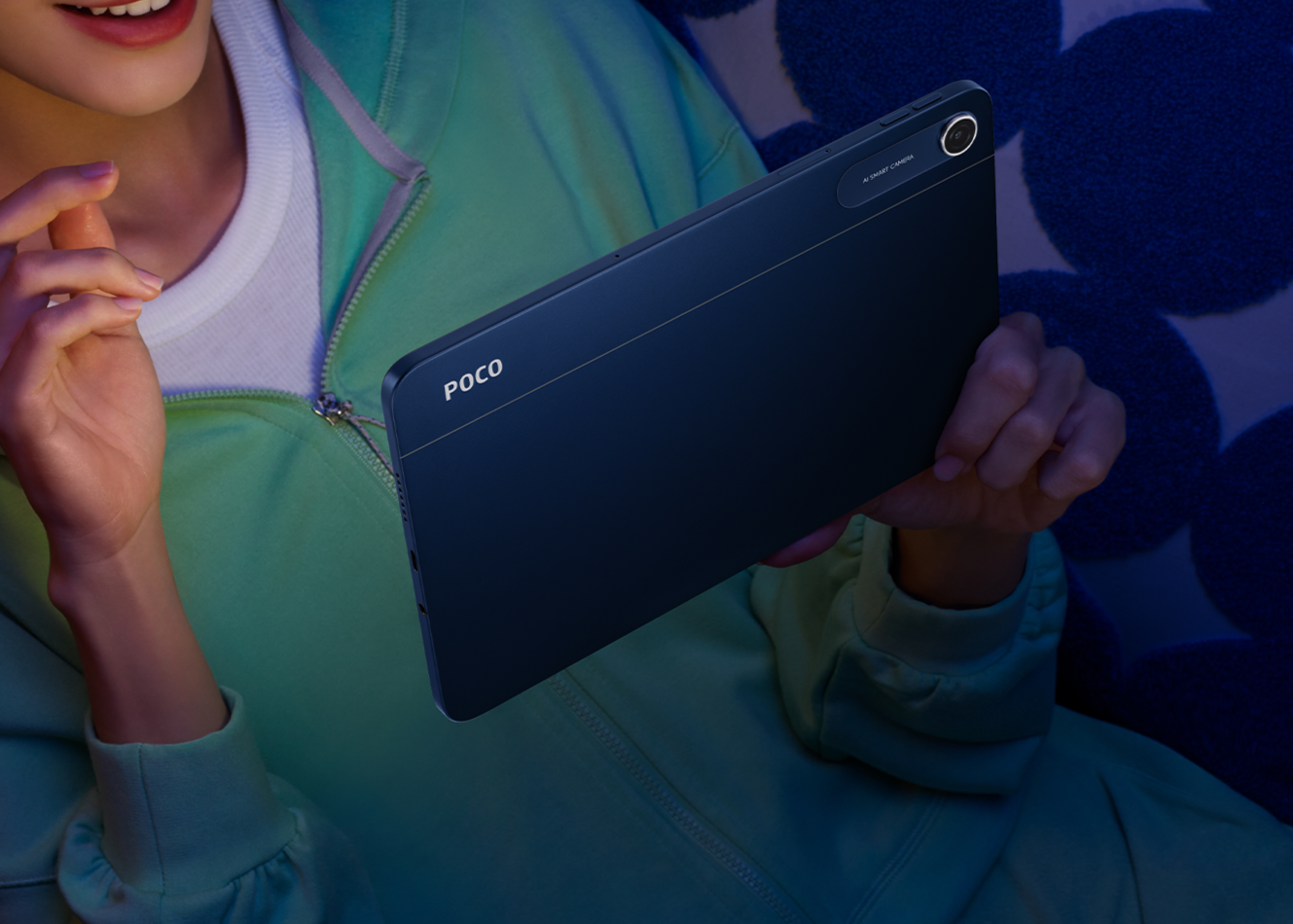
After a long time, the Android tablet market is making a comeback with some exciting budget and mid-range offerings. The tablet was a long time been slow, outdated and just for basic video streaming. Now brands are trying to improve the displays, software, battery life and design at a lower price. Xiaomi new offering under its POCO series is a prime example of this transition.
The new POCO Pad C1 officially launched on Xiaomi worldwide website, presenting a tablet device that is dedicated to entertainment, portability, and daily activities. Rather than go for the flagships, Xiaomi appears to have focused on creating a phone that would appeal to students, casual gamers, streamers, and users who are after a reliable Android tablet and don’t want to pay the big bucks.
It is the overall balance of the device that is interesting. Stylish, compact design with a smooth 120Hz display, Snapdragon chipset, stereo speakers and a metal body all feel more modern and up to date than other budget tablets.
This small tablet still feels like modern times
One of the most noteworthy features of the POCO Pad C1 is its display. Xiaomi has put together a 2048 × 1280-pixel resolution 9.7” LCD panel with a refresh rate of up to 120Hz on the tablet. The result should also be a smoother scrolling, navigating apps and gaming experience than the standard 60Hz tablet.
It also has a brightness of up to 600 nits to make it easier to use indoors and outdoors. Xiaomi equipped the smartphone with the TUV Rheinland certifications for low blue light and flicker reduction, which might further minimize eye strain in the course of lengthy reading and streaming sessions.
The resolution of the screen is very impressive for the category to consume content. It’s better to watch movies or surf social media or read documents than the older low-cost Android tablets that still have low-resolution 60Hz panels.
Some features of the display are:
- 9.7-inch LCD screen
- 2048 × 1280 resolution
- 120Hz refresh rate
- Can see up to 600 nits of brightness.
- TUV Rheinland eye-comfort certification
- Slim bezels for a clearer view.
The shape is also well thought out for portability. This tablet is very thin, measuring just 7.4mm and is quite light, weighing in at around 406 grams for everyday use. Xiaomi also opted for the metal unibody design to make the device look more premium than its price tag.
The experience is powered by Snapdragon Chipset
Xiaomi has fitted Qualcomm Snapdragon 6s 4G Gen 2 on board in the POCO Pad C1. It is not a chipset designed for the highest-end of gaming performance but it should be sufficient to handle a variety of common activities such as browsing, streaming, note-taking, multitasking, and casual gaming.
The tablet is projected to come in a number of memory options, such as:
- 4GB RAM and 64GB of internal storage
- 6GB RAM and 128GB of storage
There is also expandable storage provided in the form of an microSD card slot, which reportedly will support up to 2TB of storage. This might be particularly helpful for those who store movies, large games, or even educational material offline on the device.
hardware seems to be aimed at achieving a balance between performance and power consumption rather than pure power. Xiaomi seems to have made the PoCO Pad C1 a budget entertainment-centric tablet instead of a productivity powerhouse.
Interestingly, many tech enthusiasts online picked up on the similarities between the POCO Pad C1 and Redmi brand tablets, in just a few seconds. Android users are speculating that the tablet could also be built on the same core hardware as the Redmi Pad 2 9.7 line-up, mirroring Xiaomi’s past history of repurposing the same hardware to multiple markets.
HyperOS 3 Brings Xiaomi’s New Software Experience
Optimization of software is important on tablets, since large screens can make them feel underutilized when they have poor software interfaces. The POCO Pad C1 runs on Xiaomi HyperOS 3 running on Android 16, enabling users to enjoy the latest software ecosystem of the Chinese app maker.
HyperOS puts a big emphasis on the smoother animations, better cross-device communication and better multitasking features than previous MIUI releases. Xiaomi has also been working to build more of an ecosystem for its phones, tablets, wearables, and smart home devices.
The features that they can expect to have when using it are:
- Split-screen multitasking
- Floating windows
- Better animation smoothness
- Cross-device connectivity features
- Improved battery management
Those software enhancements could make the tablet much more useful to students and casual users.
key strength it might have is its battery life
One of the most critical features in any kind of tablet is battery longevity, particularly for those who travel a lot or watch lots of media. To ensure long battery life, Xiaomi has given the POCO Pad C1 a massive 7600mAh battery that is supported by 18W fast charging.
It should be able to power long streaming sessions, browsing the internet, video calls, or study sessions all day. Along with the efficient Snapdragon processor, the tablet might easily be a good choice for people who want maximum endurance, For its multimedia experience Xiaomi added stereo speakers with Hi-Res audio support as well, which will have a significant effect. There are many cheap tablets around that don’t support stereo audio, so that’s something that’s a nice feature here.
POCO Continues Focusing on Value, POCO has established a reputation for great hardware at great prices over the years. The brand is more about performance, battery life and display quality than top-of-the-line cameras or premium materials. The POCO Pad C1 seems to follow the same lines in the tablet version.
The specs certainly indicate that Xiaomi is targeting directly at the low-cost entertainment tablet market, but unfortunately, the company hasn’t yet released the price of the tablet. The POCO Pad C1 might be a more appealing Android tablet for students, casual users and media consumers who want something with a modern feel but don’t want to break the bank.